
Draw No Bet is a wagering format that eliminates the draw outcome from a standard three-way market. It offers bettors a refund if the match ends level, effectively converting a three-way market into a two-way contest. The mechanics behind this option, and when it makes financial sense to use it, require closer examination.
Key Takeaways
- Draw No Bet removes the draw outcome; if the match ends in a draw, your original stake is fully refunded.
- DNB odds are lower than standard win odds because the bookmaker absorbs the additional draw risk protection.
- It suits tightly contested matches where draws are likely, offering insurance while still targeting a winning outcome.
- Use the formula: DNB Odds = (1 – (1 / Draw Odds)) × Team Win Odds to independently verify fair pricing.
- DNB supports cautious bankroll management by limiting exposure while maintaining profit potential on decisive match results.
What Draw No Bet Actually Means?
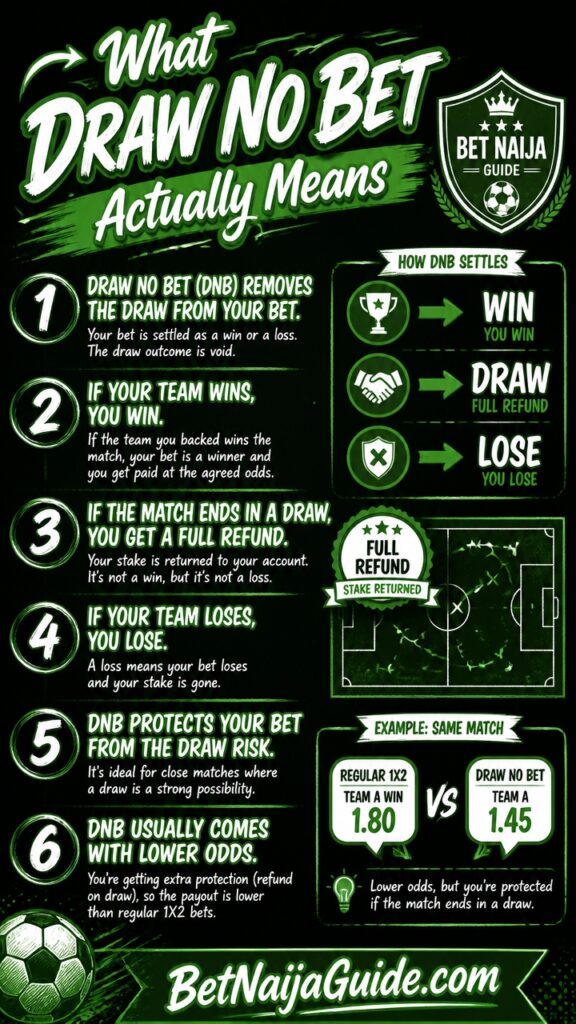
Draw No Bet (DNB) is a betting market that removes the draw as a possible outcome, allowing bettors to back either the home or away side without the risk of losing their stake to a stalemate. Should the match end level, the original stake is refunded in full. This structure makes DNB a compelling betting strategy for those seeking controlled exposure rather than speculative risk. Odds are typically lower than standard moneyline markets, reflecting the reduced liability carried by the bettor. Effective match analysis is crucial when applying DNB, as identifying contests where one side holds a genuine advantage—yet a draw remains plausible—maximizes the market’s value. DNB fundamentally functions as insurance, trading reduced returns for meaningful protection against an inconclusive result.
How Your Stake Is Protected on a Draw?
The refund mechanism at the heart of Draw No Bet is straightforward: if the match ends level, the bettor’s stake is returned in full, leaving no net loss on the wager. This stake refund functions as built-in insurance, making DNB a disciplined betting strategy for closely contested fixtures.
Key protective features include:
- A full stake refund is triggered automatically on any draw result
- No partial deductions are applied to the returned amount
- The protection applies regardless of the scoreline, provided it is level
- Some bookmakers process DNB as one market; others use two bets — the outcome is identical
- Bettors retain financial freedom to reinvest the returned stake immediately
This mechanism eliminates draw-related losses without requiring additional side bets or complex hedging arrangements.
Draw No Bet Odds vs. Standard Win Odds
Odds represent the clearest indicator of the trade-off essential in Draw No Bet markets. Standard win odds reflect raw win probability without accounting for draw outcomes, whereas DNB betting compresses those odds downward to price in stake protection. A team priced at 2.10 on a standard win market may return only 1.65 under DNB conditions. That reduction quantifies the insurance being purchased. A £100 stake at standard odds generates greater absolute profit, while the same stake at DNB odds yields less but carries reduced exposure. Bettors traversing closely contested fixtures, where draw probability is heightened, often accept compressed returns as a rational concession. The choice between markets is therefore not purely about odds but about how much risk each bettor is willing to absorb.
When Draw No Bet Is Worth Using?
Understanding when Draw No Bet delivers genuine value requires moving beyond the odds comparison and into match context. Strategic betting with this market hinges on match analysis that identifies high-draw-probability scenarios.
Draw No Bet is worth considering when:
- Tightly contested matchups present genuine deadlock possibilities
- Away underdogs carry strong drawing form, offering risk-reduced returns
- Favorites face competitive opposition in leagues defined by parity
- Match conditions — form, injuries, tactical setups — suggest defensive stability
- Cautious bankroll management demands insurance without abandoning winning potential
Bettors who integrate draw probability into their match analysis frameworks gain a structural edge. Rather than accepting unnecessary exposure, Draw No Bet allows disciplined engagement with volatile fixtures, preserving capital while maintaining access to meaningful returns.
How to Calculate Your Own Draw No Bet Odds?
Few bettors realise that Draw No Bet odds can be derived independently using a straightforward formula applied to standard 1X2 market prices. The calculation is: DNB Odds = (1 – (1 / Draw Odds)) × Team Win Odds.
If Team A carries 2.00 win odds and the draw sits at 3.00, the resulting DNB odds equal 1.50. This figure reflects reduced risk, explaining why DNB odds consistently fall below straight win prices.
Understanding stake distribution remains crucial, as the conversion method directly shapes potential returns. Once calculated, rigorous odds comparison against bookmaker-listed DNB prices determines whether genuine value exists. Bettors who perform this calculation independently retain full control over their wagering decisions rather than accepting bookmaker pricing without scrutiny.